
- Our verdict: For most people, a midweight tee at 150 to 200 GSM is the best everyday choice. It drapes cleanly and is not see-through.
- Choose lightweight, 120 to 160 GSM, for hot weather and layering. Choose heavyweight, 200 GSM and up, for a structured, boxy look.
- Compare the GSM number, not the word heavyweight. A 190 GSM tee can be heavyweight in one brand and midweight in another.
T-shirt fabric weight is measured in GSM, grams per square meter. A higher number means a thicker, heavier fabric that drapes away from the body. For everyday wear, 150 to 200 GSM is the sweet spot.
This guide explains what GSM means, the three weight ranges, why heavyweight drapes better, and how to check the weight before you buy, starting with our guide to How to Style an Oversized T-Shirt.
At a glance: t-shirt fabric weight
| Weight | GSM range | oz/yd2 range | How it feels and drapes | Best for |
|---|---|---|---|---|
| Lightweight | 120-160 GSM | 3.5-4.5 oz/yd2 | Soft and light, drapes close to the body | Hot weather and layering |
| Midweight | 150-190 GSM | 4.5-5.3 oz/yd2 | Smooth and balanced, holds its shape | Everyday wear |
| Heavyweight | 200 GSM and up | 6 oz/yd2 and up | Thick and structured, stands away from the body | Streetwear outfits |
What GSM actually means
GSM stands for grams per square meter. It is the weight of one square meter of fabric, so it measures how much fabric is in the tee.
In the United States, listings often use ounces per square yard, written as oz/yd2. To convert, divide GSM by 33.906. A 150 GSM tee is about 4.4 oz/yd2, a 190 GSM tee is about 5.6 oz/yd2, and a 200 GSM tee is about 5.9 oz/yd2.
There is no official standard for heavyweight, so the label varies by brand. A 190 GSM tee is heavyweight in one brand’s chart and midweight in another. Compare the number, not the word.
The three weights
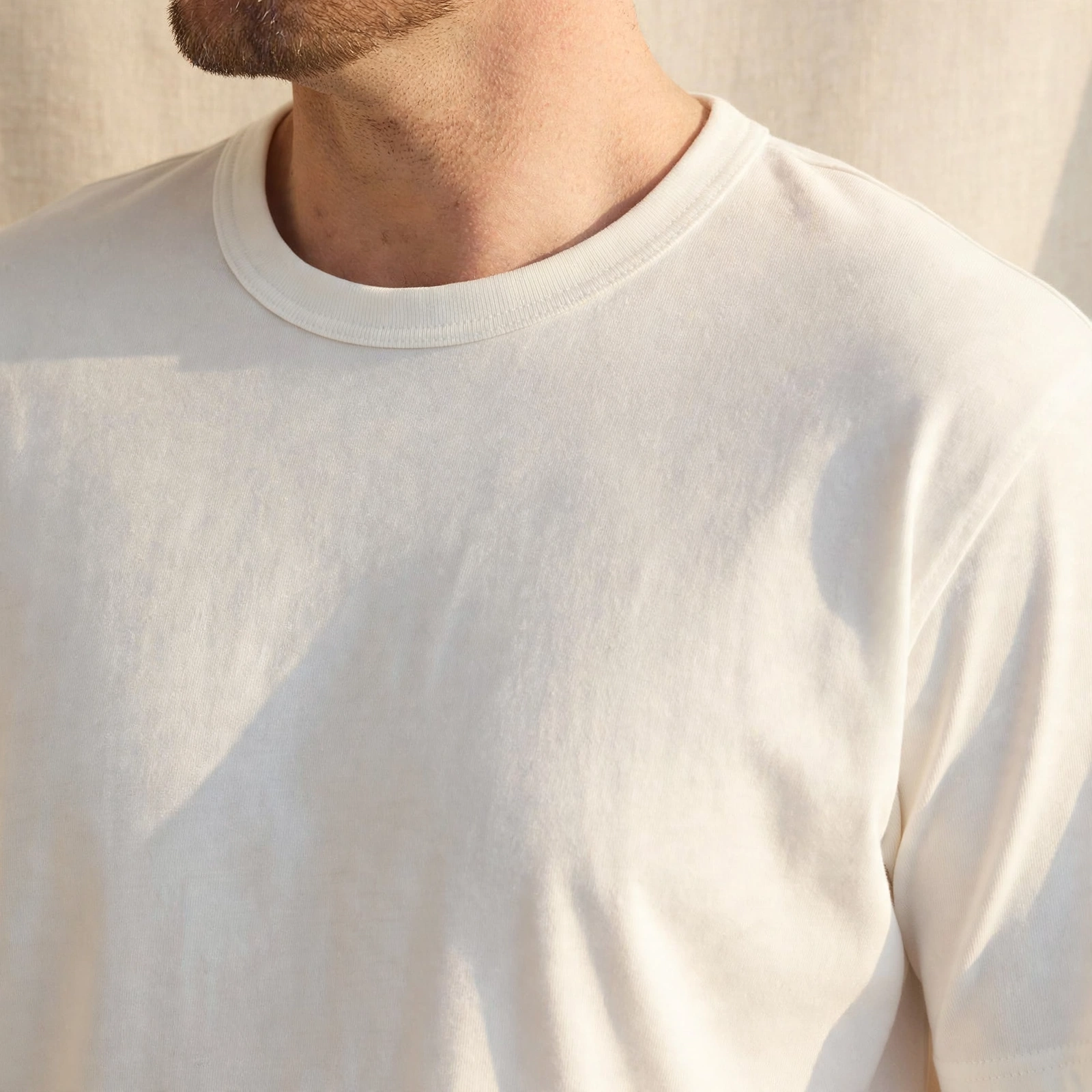
Most guides agree on three broad ranges, with some overlap at the edges. Use them as a starting point, then think about climate and fit.
Lightweight (120-160 GSM)
A lightweight tee feels soft, thin, and airy. It drapes close to the body and dries fast, which makes it a good pick for hot weather and layering. The trade-off is opacity: a white lightweight tee can be see-through.
Midweight (150-190 GSM)
A midweight tee is the everyday default. It has enough body to hold its shape and cover well, without the stiffness or warmth of a heavy tee. It pairs well with jeans and shorts.
Heavyweight (200 GSM and up)
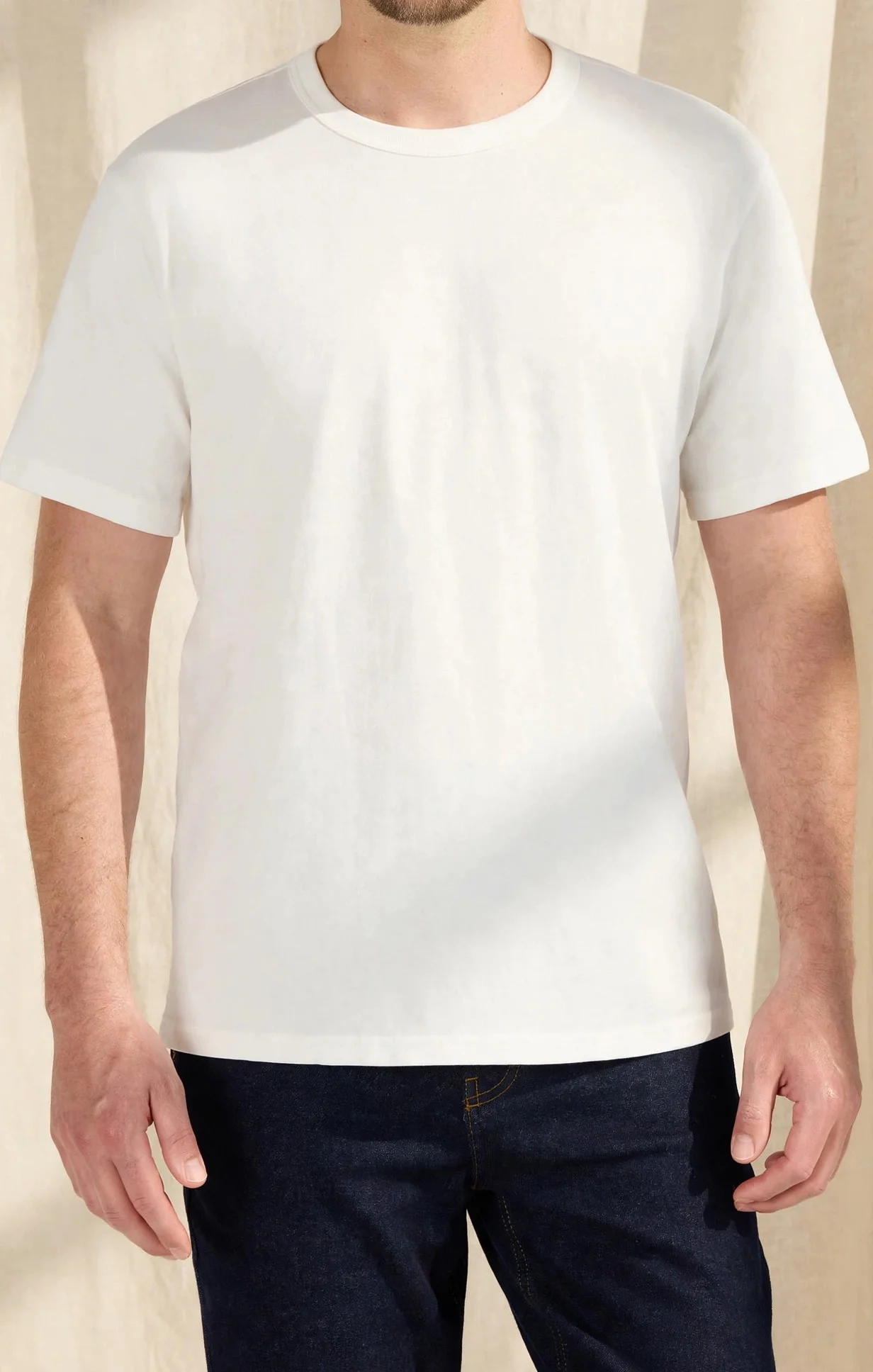
A heavyweight tee feels thick, firm, and substantial. It stands away from the body and holds a boxy shape. Our Oversized Cotton T-Shirt is a heavyweight example. You can see the live price on Amazon for the Amazon Essentials Relaxed-Fit Heavyweight T-Shirt. The same tee is in our shop as the Oversized Cotton T-Shirt, with more picks in our Men category and on our All Picks page.
Why heavyweight drapes better
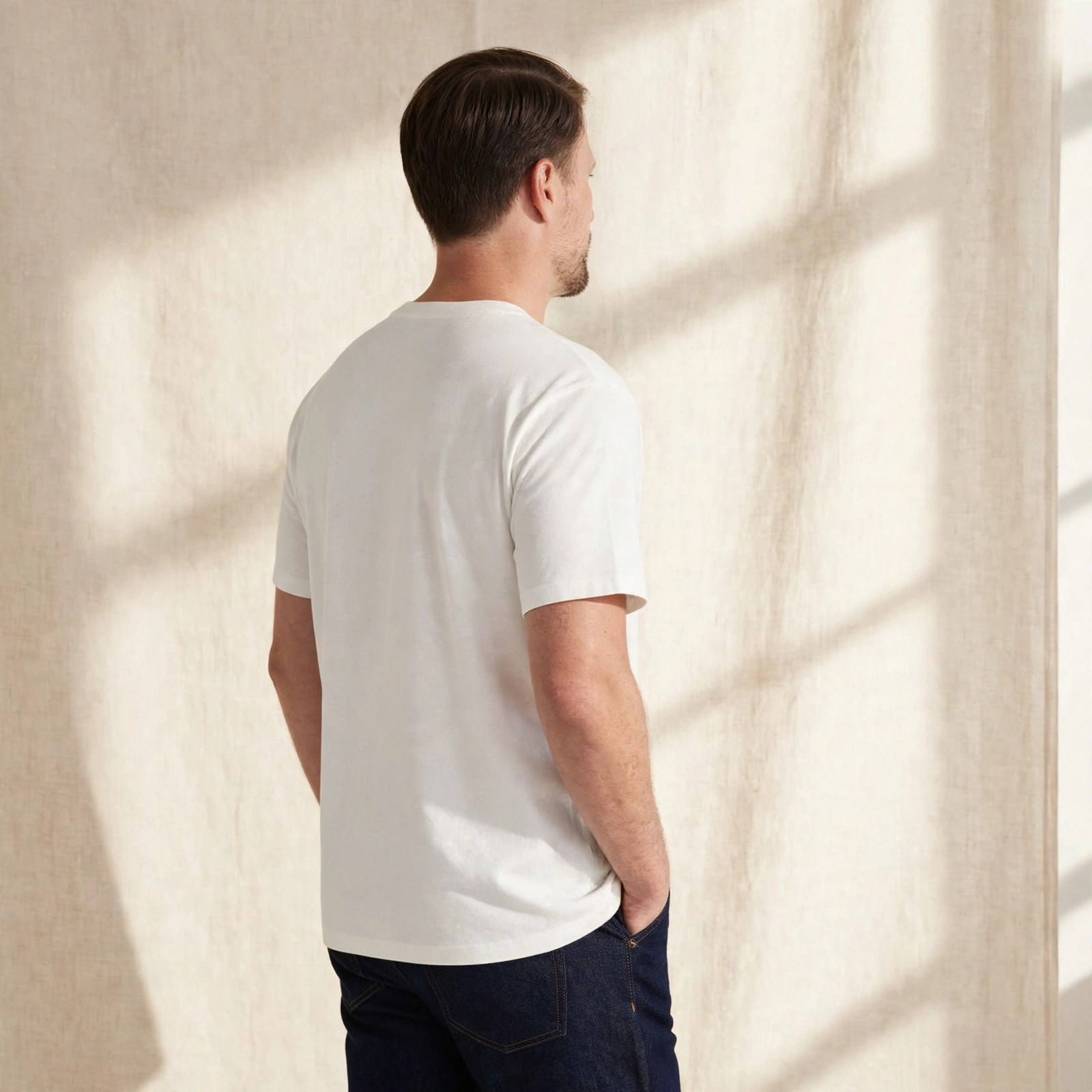
Drape is how fabric falls under its own weight. A light fabric has little weight to pull it down, so it follows the shape of the body and can cling. A heavy fabric falls in a clean line, so it stands away from the body and holds a boxy shape.
Thicker yarns and a tighter knit give a heavyweight tee more body, so the shoulders stay square and the collar holds its shape. The extra fabric also blocks light, so a white heavyweight tee is not see-through. Heavy cotton can feel stiff until it has been washed a few times.
How to pick your weight
Pick by climate and use first, then by fit.
Hot weather
Choose lightweight, 120 to 160 GSM. It breathes, dries fast, and stays comfortable when you sweat. Save heavyweight for cooler days, because a heavy tee gets heavy and sags when it is soaked with sweat.
Everyday wear
Choose midweight, 150 to 200 GSM. It works with jeans, so see our Slim vs Skinny vs Straight Jeans guide to pick the fit, and for a smarter outfit, see our Smart Casual guide.
Streetwear and structured fits
Choose heavyweight, 200 GSM and up. The boxy drape, firm collar, and clean shoulder line suit oversized and streetwear outfits. Check the size guide first, because boxy cuts often run large.
How to check weight before you buy
Start with the listing. Look for a GSM or oz/yd2 number in the product details, the size guide, or the fabric section. If the listing only says heavyweight, treat it as a hint, not a fact.
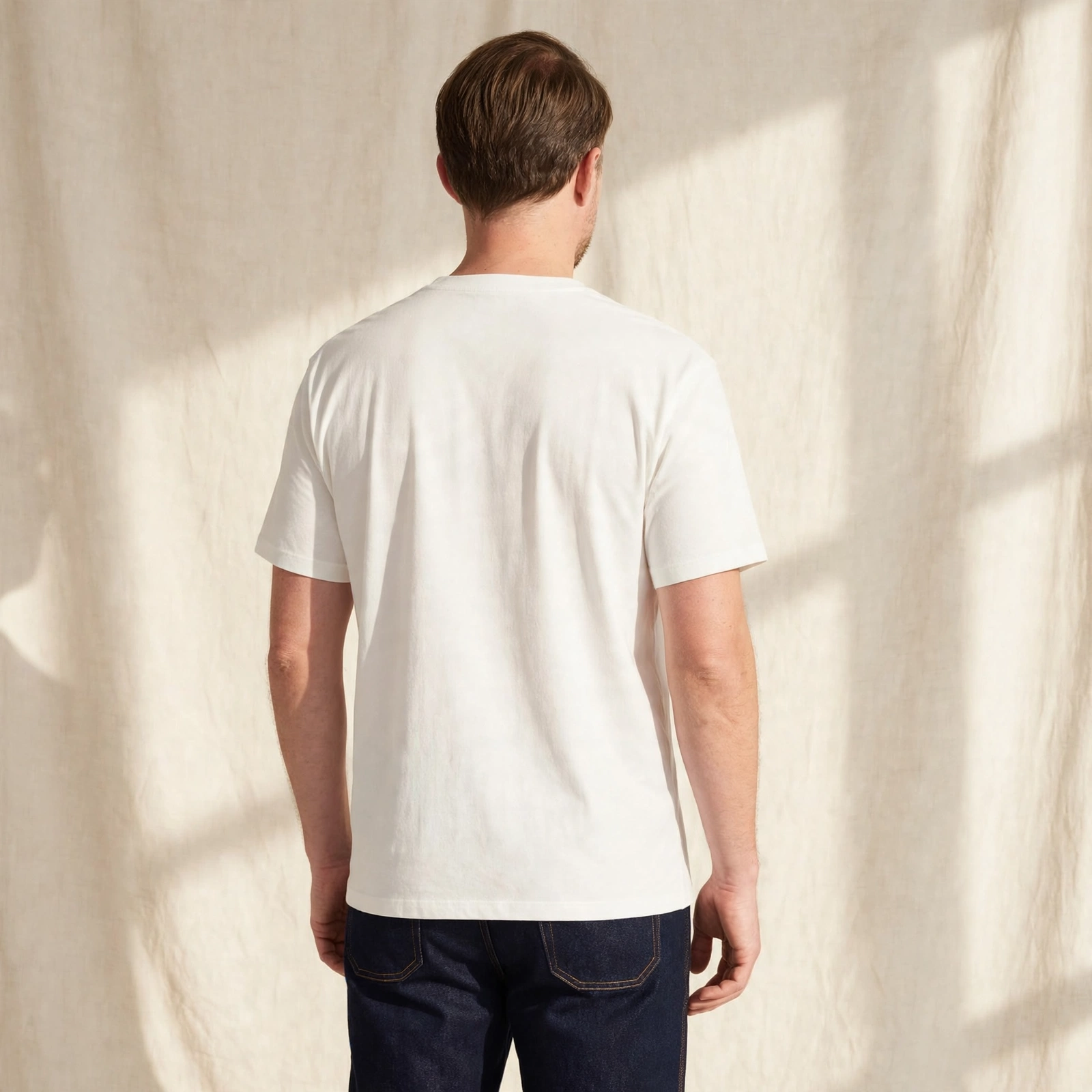
If you already own the tee, try two simple checks. Hold it up to a window in daylight: if you can see light through a white tee, it is likely lightweight. Then scrunch a handful of fabric and let go: a heavy tee feels firm and springs back with more body.
What buyers praise and complain about
Buyer reviews repeat the same themes across heavyweight tees: praise for drape and durability, and complaints about fit, stiffness, and heat.
What buyers praise
- Heavyweight tees drape away from the body instead of clinging.
- White heavyweight tees are not see-through.
- Collars hold their shape after many washes.
What buyers complain about
- Boxy heavyweight cuts often run large, so sizing confuses first-time buyers.
- Heavy cotton can feel stiff until it has been washed a few times.
- Heavy tees get heavy and sag when soaked with sweat in hot weather.
- 100% cotton shrinks about 3-5% on the first warm wash.
How we chose
This guide is desk research from published guides and buyer reviews. No product was lab-tested by us. We compared the GSM ranges that repeat across guides and the themes that repeat in buyer reviews. Learn more about how we work on our About Us page.
Mistakes to avoid
- Trusting the word heavyweight without checking the GSM number.
- Buying heavyweight for hot, humid weather.
- Ignoring shrinkage: 100% cotton can shrink about 3-5% on the first warm wash.
- Expecting heavyweight to be automatically better quality.
- Buying your usual size in a boxy heavyweight cut without checking the size guide.
Frequently asked questions
What GSM is good for a t-shirt?
For everyday wear, 150 to 200 GSM is a good choice. It holds its shape, is not see-through, and works in most seasons.
Is 200 GSM a heavyweight t-shirt?
Yes, in most guides 200 GSM and up counts as heavyweight, or about 6 oz/yd2 and up. There is no official standard, so check the number first.
Does a heavier t-shirt last longer?
Often, yes. Heavier fabric resists holes and stretching better, and collars hold their shape after many washes. Weight alone does not prove quality.
What does oz mean on a t-shirt listing?
Oz means ounces per square yard, written as oz/yd2. Divide GSM by 33.906 to convert: 200 GSM is about 5.9 oz/yd2.